Farooq Sattar Biography: Career, Education and Political Life
Farooq Sattar: From Karachi Mayor to National Politics
Introduction
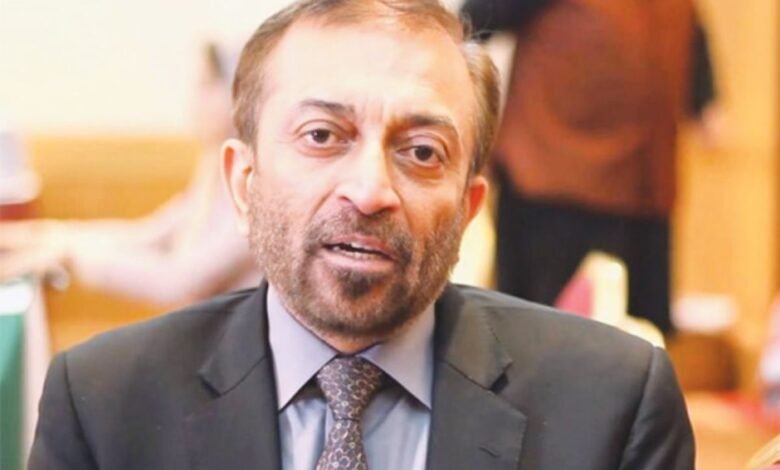
Farooq Sattar is a veteran Pakistani politician whose public life has been closely connected with Karachi for more than three decades. Trained as a doctor, he entered politics during his student years and eventually became one of the most recognizable political figures associated with Karachi’s urban politics. His journey has included municipal leadership, provincial government, federal responsibilities, and repeated terms in Pakistan’s parliament.
One of the most notable moments in his early career came in 1987, when he became Mayor of Karachi at the age of 28. He later served as a member of both the Sindh Assembly and National Assembly and held the federal portfolio of Overseas Pakistanis. In the current National Assembly, he represents NA-244 (Karachi West-I) and is listed as an MQM member.
Quick Facts About Farooq Sattar
| Category | Details |
|---|---|
| Full Name | Dr. Muhammad Farooq Sattar |
| Date of Birth | April 9, 1957 |
| Birthplace | Karachi, Pakistan |
| Profession | Politician and medical graduate |
| Education | Medicine, Sindh Medical College |
| Political Affiliation | MQM / MQM-P |
| Major Early Office | Mayor of Karachi |
| Mayor of Karachi | 1987 |
| Provincial Office | Sindh Minister for Local Government |
| Federal Office | Federal Minister for Overseas Pakistanis |
| Current Assembly | National Assembly of Pakistan |
| Current Constituency | NA-244, Karachi West-I |
| Current Parliamentary Role | Chairman, Standing Committee on Privatization |
| Political Base | Karachi |
The current National Assembly record lists him as an MQM member from NA-244 and identifies him as chairman of the Standing Committee on Privatization.
Early Life and Background
Farooq Sattar was born in Karachi and grew up in a city that would later become the central focus of his political career. His early education eventually led him toward medicine, and he graduated from Sindh Medical College in 1986.
Although medicine was his formal field of study, his interests increasingly moved toward public affairs and student politics. He became associated with the All Pakistan Muttahida Students Organization, commonly known as APMSO, during the late 1970s. The organization later became closely linked with the emergence of the MQM political movement.
His transition from student politics to mainstream political leadership was relatively rapid. Within several years, he had moved from organizational activism into elected public office and became an important figure in Karachi’s political scene.
Age and Physical Features
Born on April 9, 1957, Farooq Sattar is 69 years old as of August 2026.
Unlike entertainment celebrities, his public profile is primarily political, so detailed information about physical measurements such as height, weight, or body statistics is not consistently documented by authoritative sources. For that reason, specific measurements should not be presented as fact without reliable confirmation.
His appearance is generally associated with his long public career, during which he has frequently appeared at political meetings, parliamentary sessions, press conferences, and public events.
Education and Medical Background
Before becoming a full-time political figure, Farooq Sattar pursued a medical education. He graduated from Sindh Medical College in 1986, giving him a professional background that differs from many politicians who enter politics through law, business, or family political networks.
His medical education remains an interesting part of his biography because his professional training and political career eventually followed very different paths.
The discipline associated with medical education also became part of the public image he developed as a politician: methodical, issue-focused, and accustomed to discussing problems in detail.
Political Career and Major Achievements
The career of Farooq Sattar has covered local government, provincial politics, federal politics, and parliamentary leadership. His biggest early achievement was becoming Mayor of Karachi in 1987 at just 28 years old.
He subsequently served in the Sindh Assembly, including as Leader of the Opposition in 1993, and became Sindh’s provincial minister for local government in 1997. He later returned to national politics and served as Federal Minister for Overseas Pakistanis from 2008 to 2013.
His political career has also included repeated service in parliament and senior responsibilities within the MQM. These positions established him as one of the party’s experienced parliamentary voices.
From Karachi Mayor to National Politics
Becoming mayor was a turning point in his public career. Karachi is Pakistan’s largest metropolitan center and one of its most important economic hubs, making the city’s mayoral office politically significant.
His mayoral experience gave him first-hand exposure to municipal administration and the challenges of running a large urban center. After leaving local government, he continued his political career through the Sindh Assembly and National Assembly.
According to historical parliamentary profiles, he won National Assembly seats in the 1988, 1990, and 1997 elections, while also returning through provincial politics during periods when MQM’s electoral strategy changed.
Role in MQM Politics
For much of his political career, Farooq Sattar has been closely associated with the MQM. He became one of the party’s senior parliamentary figures and served in important organizational positions.
His role became particularly significant because he often represented the party in national political discussions. His parliamentary experience allowed him to act as a bridge between Karachi-based political concerns and debates taking place in Islamabad.
The political history of MQM has gone through major changes over the years, and Sattar has remained involved through different phases of that history.
Federal Minister for Overseas Pakistanis
One of the most important national-level positions held by Farooq Sattar was Federal Minister for Overseas Pakistanis.
He served in the federal government from 2008 to 2013. The position brought him into contact with issues affecting Pakistanis living and working outside the country, including their relationship with government institutions and national economic interests.
The role also expanded his political profile beyond Karachi. While his strongest political identity remained connected with the city, his federal responsibilities gave him experience in a wider national policy environment.
Return to Parliament
After several periods of political change, Farooq Sattar returned to the National Assembly following the 2024 general election.
The current National Assembly profile identifies him as Dr. Muhammad Farooq Sattar, an MQM member representing NA-244 (Karachi West-I). His oath-taking date is recorded as February 29, 2024.
This is an important distinction because older profiles may show him under constituencies such as NA-249 or other previous constituency numbers. Electoral boundaries and constituency numbers have changed over different assembly periods.
Current Parliamentary Role
As of 2026, Farooq Sattar remains active in parliamentary politics. The National Assembly lists him as chairman of the Standing Committee on Privatization.
Committee leadership gives parliamentarians an opportunity to examine government policies, question officials, and contribute to discussions surrounding the responsibilities of their respective committees.
His current parliamentary position demonstrates that his political career has continued well beyond his earlier years as Karachi’s mayor.
Relationship With Karachi
Karachi has remained the defining geographical center of his political career.
From his time as mayor to his years in the National Assembly, many of his political positions have focused on urban governance, municipal resources, infrastructure, security, business activity, and the city’s representation within provincial and federal structures.
His political speeches and public statements frequently address concerns raised by Karachi’s residents, traders, builders, and other economic groups.
For Sattar and the political organization with which he is associated, Karachi’s financial contribution to Pakistan and its share of public resources have remained recurring political issues.
Marriage and Family Life
Farooq Sattar generally keeps his family life away from the center of his political activities. Unlike entertainment personalities, he does not regularly use his public profile to discuss private family matters.
Reliable public biographies focus mainly on his education, political career, parliamentary positions, and organizational responsibilities rather than providing extensive details about his wife, children, or day-to-day family life.
Because of this limited reliable information, specific claims about his private family circumstances should be treated carefully. His public legacy is much more closely connected with his political career than with his personal life.
Social Media Presence
Political communication has changed considerably during Farooq Sattar’s career. When he first entered politics, newspapers, television, public meetings, and traditional political gatherings were the primary ways politicians communicated with the public.
Today, political figures also receive attention through digital platforms and online news coverage. Statements made during press conferences and political meetings can quickly reach audiences through social media.
Sattar’s public political activities are regularly discussed and reported through digital media, particularly when he comments on Karachi, parliamentary matters, MQM politics, or national issues.
Because social-media accounts can change and unofficial profiles may use politicians’ names, readers should verify whether an account is genuinely associated with him before treating it as an official source.
Who Is Farooq Sattar?
Farooq Sattar is a Pakistani politician and former mayor of Karachi who has spent decades involved in the country’s political system.
He is particularly known for his connection with MQM politics and Karachi. His career includes service as mayor, provincial minister, federal minister, opposition leader in the Sindh Assembly, National Assembly member, and senior party figure.
His medical education also makes his background distinctive. Instead of continuing primarily in medicine, he chose a path in public service and politics, eventually becoming one of Karachi’s better-known political representatives.
In 2026, he remains a sitting member of the National Assembly and represents NA-244.
Personality and Interests
Farooq Sattar’s public personality has largely been shaped by his political career. He is known for participating in political meetings, parliamentary discussions, press conferences, and debates about Karachi and national affairs.
His communication style generally focuses on political arguments and policy issues rather than celebrity-style publicity. His long experience in politics has also made him a familiar figure in Pakistani political discussions.
Beyond his professional background in medicine and politics, detailed information about private hobbies and personal interests is limited in reliable public biographies. It is therefore better to avoid presenting unverified claims about his lifestyle.
Net Worth and Income
There is no sufficiently reliable, independently verified public figure that should be presented as Farooq Sattar’s exact current net worth.
Politicians’ income can come from official parliamentary compensation, previous professional activities, declared assets, and other legally documented sources. However, an exact personal net-worth estimate requires current financial records rather than figures published by unofficial celebrity or biography websites.
For this reason, claims giving a specific dollar or rupee amount as his net worth should be treated cautiously unless supported by an authoritative financial disclosure.
His most clearly documented professional income in recent years is connected with his role as a parliamentarian, while his earlier career included political and government positions.
Public Image and Legacy
Farooq Sattar has built a political identity strongly connected with Karachi. His early achievement as mayor gave him national visibility, while his subsequent parliamentary and ministerial positions established him as a long-serving politician.
Supporters have often viewed him as an experienced parliamentary voice with substantial knowledge of Karachi’s political and administrative issues. At the same time, like many long-serving politicians, his career has also been part of periods of intense political competition and controversy.
His legacy therefore cannot be reduced to a single office. It includes his role in Karachi’s municipal politics, his years in parliament, his federal ministerial service, and his participation in the changing political structure of the MQM.
Why His Political Career Matters
The story of Farooq Sattar is also connected with the broader political history of Karachi.
The city has played a major role in Pakistan’s economy, while its politics have frequently been shaped by debates over representation, local government, resources, security, and administrative authority.
Because Sattar has worked at municipal, provincial, and federal levels, his career provides an interesting perspective on how Karachi’s political concerns can move from city government to the national parliament.
His continued parliamentary presence in 2026 means that his political career is still developing rather than being simply a historical chapter.
Farooq Sattar’s Political Journey at a Glance
His journey can be understood through several major stages.
He began with student politics and became associated with APMSO. He then moved into elected politics and achieved national recognition after becoming Mayor of Karachi in 1987.
During the 1990s, he held provincial political responsibilities, including the local government portfolio. His later return to national politics eventually led to a federal ministerial position and continued parliamentary involvement.
Today, he remains a member of the National Assembly from Karachi and holds a committee leadership position.
Conclusion
Farooq Sattar’s biography reflects a long and eventful journey through Pakistani politics. Starting with student activism and medical education, he went on to become Mayor of Karachi at 28, serve in the Sindh government, represent Karachi in parliament, and hold a federal ministerial position.
His career has remained closely connected with Karachi, where issues such as urban development, governance, resources, economic activity, and political representation have been central to his public work.
As of 2026, he continues to serve in the National Assembly from NA-244 and chairs the Standing Committee on Privatization.
Whether viewed through the lens of Karachi’s municipal history, MQM’s political evolution, or Pakistan’s parliamentary politics, his decades of public service make him an important figure to understand when studying modern Pakistani political history.
8 FAQs About Farooq Sattar
1. Who is Farooq Sattar?
Farooq Sattar is a Pakistani politician and medical graduate who has held several important political positions, including Mayor of Karachi, provincial minister, federal minister, and member of the National Assembly.
2. When was Farooq Sattar born?
He was born on April 9, 1957, in Karachi. He is 69 years old as of August 2026.
3. What did Farooq Sattar study?
He studied medicine and graduated from Sindh Medical College in 1986.
4. When did Farooq Sattar become Mayor of Karachi?
He became Mayor of Karachi in 1987 at the age of 28. Contemporary profiles have described him as one of the youngest mayors in the world at that time.
5. Which constituency does Farooq Sattar represent?
The current National Assembly profile lists him as representing NA-244 (Karachi West-I).
6. Which political party does Farooq Sattar belong to?
He is currently listed by the National Assembly as a member of MQM. His political career has been closely associated with the MQM political movement and its later organizational developments.
7. What federal position did Farooq Sattar hold?
He served as Federal Minister for Overseas Pakistanis from 2008 to 2013.
8. What is Farooq Sattar doing now?
As of 2026, he is serving as a member of Pakistan’s National Assembly from NA-244 and is chairman of the Standing Committee on Privatization.